
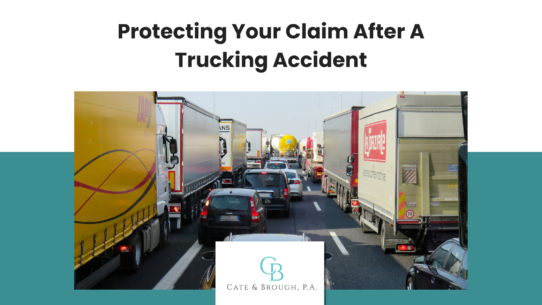
Because of their size, accidents involving trucks can have catastrophic consequences. If you are ever involved in an accident with one, take the necessary steps to protect yourself and your future claim.
Unique Elements of an Accident Involving a Truck
Trucking accidents differ significantly from standard car accidents. The first unique element is the vehicle’s size and weight. Trucks can cause extensive damage and more severe injuries compared to passenger vehicles. An 18-wheeler generates an enormous force in a collision, quickly reaching millions of Newtons depending on its speed and the specific circumstances of the crash. This is why collisions involving large trucks can be particularly destructive and result in severe damage and injuries.
Another critical factor is the presence of multiple parties. In a trucking accident, you may deal with the truck driver, the trucking company, and potentially another outside party. These can be companies that have supplied parts to the truck or are responsible for its maintenance. Identifying the correct party to hold liable can be complex. The truck might be owned by one company, driven by another employee, and carrying goods for another entity.
Federal regulations also play a significant role in trucking accidents. Truck drivers and trucking companies are beholden to the safety standards set forth by the Federal Motor Carrier Safety Administration (FMCSA). These regulations cover how long a driver can drive, maintenance schedules, and load limits. Any violations of these regulations help establish liability.
Trucks often have recording devices such as video cameras and black boxes that record data about the trip. This data can provide evidence about the truck’s speed, braking, and other factors during the accident.
How to Protect Yourself & Your Claim
Protecting yourself and your claim after a trucking accident involves several essential steps. By taking prompt action and speaking with legal counsel, your attorney will take the proper steps to preserve the evidence. For instance, what happens if the truck has been moved to a wrecking yard? Next, your attorney will request access to the truck’s video recordings and black box data. These devices provide insights into the events leading up to the accident. You can access this information through specific discovery requests during the legal process.
Identifying the responsible party is another crucial step. This might involve the trucking company, the driver, or another entity. Multiple layers of liability often exist, so thorough investigation and documentation are essential.
Use your phone to take as many photographs as you can. In addition to the vehicles involved in the accident, take some of the surrounding scene. These photographs can provide essential evidence for your claim—document visible damage, road conditions, and contributing factors like signage or traffic signals.
It is also vital to understand the federal regulations that truck drivers must follow. Any infractions under these regulations can strengthen your claim. For instance, violations of hours-of-service rules or maintenance requirements can indicate negligence on the part of the trucking company. It is also essential to be patient, as trucking accident claims can take a couple of years to resolve. The complexity of these cases often requires extensive investigation and negotiation.
Begin Working Toward the Compensation You Need
If you have been involved in a trucking accident, contact the experienced attorneys at Cate & Brough to schedule a consultation. We can help you navigate the legal process, gather essential evidence, and ensure that all responsible parties are held accountable.

Cate & Brough, P.A.


