
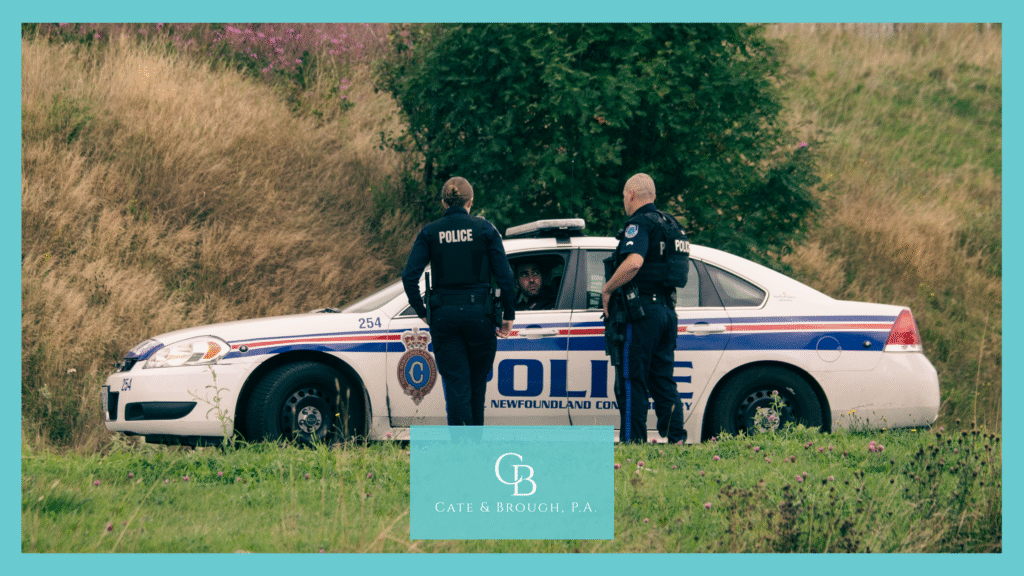
Executive Summary: If police question you in South Carolina, you can invoke your right to remain silent and ask for an attorney. You should stick to giving your name and ID if required, and avoid sharing extra explanations. Don’t lie, don’t argue, and don’t waive your rights early. Clear, respectful statements can safeguard your rights during a stressful moment.
When an officer approaches and starts asking questions, your heart can race. What you say or don’t say can make a big difference later. You don’t have to face those moments unprepared. Knowing just a few basic rules can protect your rights and avoid unwanted trouble.
What You Should Say
- “I choose to remain silent.” You have a constitutional right, under the Fifth Amendment, not to answer questions that could incriminate you.
- “I want to speak with a lawyer.” Once you ask for a lawyer, the police must stop asking questions until your attorney is present.
- “Am I free to leave?” If you are not under arrest, you can ask if you’re free to go. If the officer says yes, you may politely walk away.
- Only your name and identification (if required). In many situations, you are required to show a driver’s license, registration, or ID. But you are not required to answer detailed questions about where you’ve been, what you were doing, or who you were with.
These phrases are simple but powerful. They make clear that you are exercising your rights without being rude or disrespectful.
What You Shouldn’t Say
- Don’t volunteer extra information or explanations. Even a small sentence like “I only had one drink” or “I didn’t see the sign” can be turned around against you later.
- Don’t lie. If you’re asked a direct question, lying is risky and can lead to more charges if it’s discovered.
- Don’t say “no comment.” Prosecutors might use that phrase to argue you were hiding something. It’s better to invoke your right to remain silent.
- Don’t interrupt or argue. Keep your tone calm and firm, but don’t resist or shout.
- Don’t waive your rights unknowingly. If you start talking before asking for a lawyer, courts often treat what you say as a voluntary statement.
Also, be careful: officers in South Carolina are allowed to use deception during questioning. They might claim to have more evidence than they do, or say others have already confessed.
Final Note
You never have to agree to answer police questions beyond basic identification. Using clear, respectful language to protect your rights is smart. Saying the wrong thing under stress or by accident can have serious consequences.
If you’re ever questioned by the police and unsure what to say, get legal help before talking further. You don’t have to go it alone. If you want help understanding your rights or what to do after being questioned, reach out to Cate & Brough. We’re here to help you protect yourself.

Cate & Brough, P.A.


